

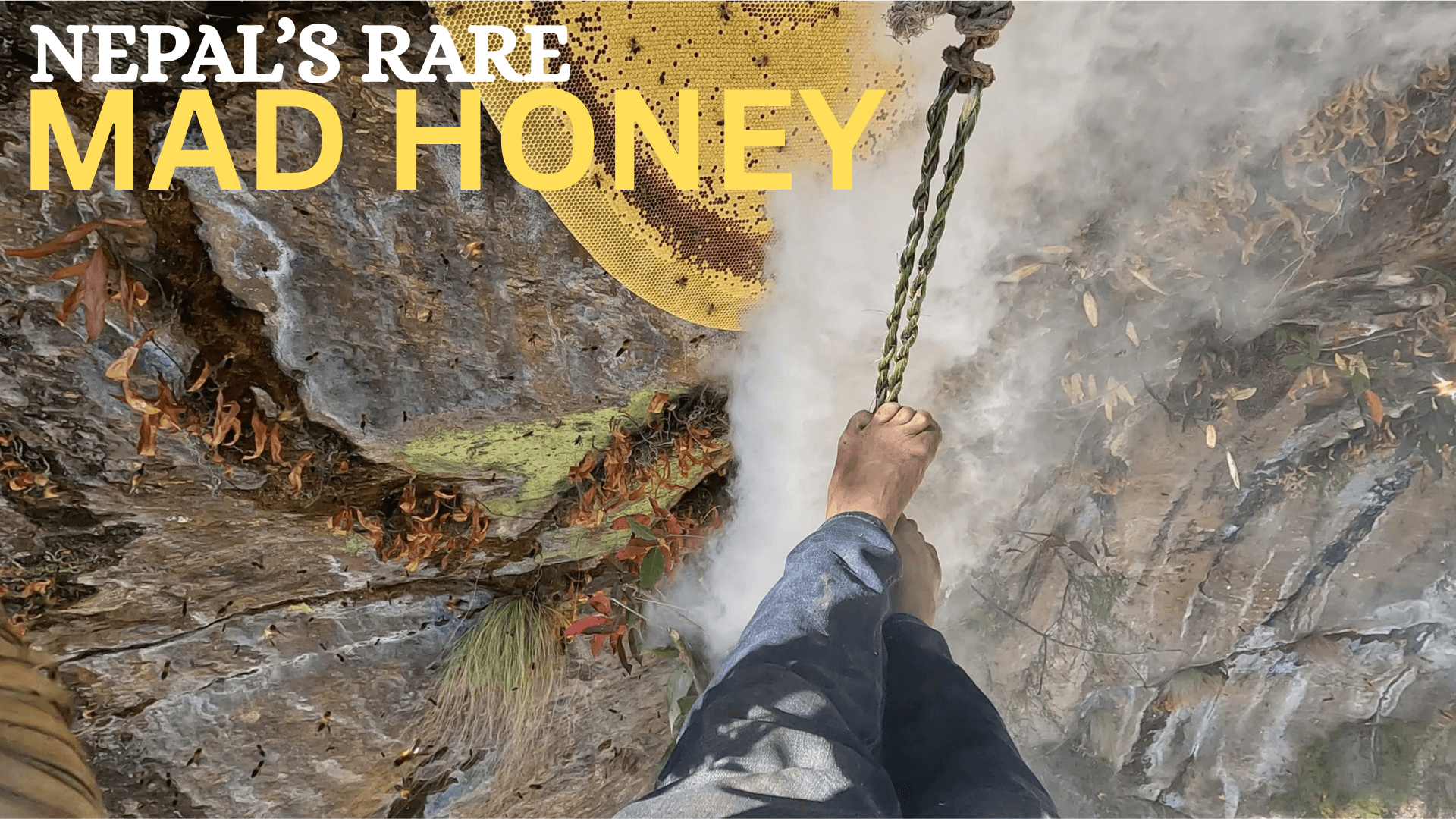
Mad Honey: Nepal’s Rare Wild Himalayan Honey
High in the lofty cliffs of the Himalayas, where clean air is gently blowing, honeybees construct their hive on rocks, where the unique mad honey has been harvested for centuries. Once you learn the details about mad honey and its unusual properties as compared to regular honey that can be found in your home, you are bound to be surprised to find out that it is a great honor to tourists, scientists, and health enthusiasts.
This article is meant to give you information on every aspect concerning mad honey: its characteristics, the methods of its collection, the effects on the human body, its historical and modern use, and the applicational techniques.
What is Mad Honey?
Mad honey is a unique kind of raw honey that is derived from the Himalayan giant bee forming when the bee collects nectar and pollen from rhododendron flowers, especially in the high-altitude forests in Nepal and parts of Turkey. Unlike ordinary honey, this honey has an active ingredient called grayanotoxins that comes from rhododendron’s bloom that makes mad honey special.
These grayanotoxins present in mad honey give it its name, as consuming only a small quantity can result in mild warming sensation in the body making the person experience lightheadedness; hence some individuals refer to it as hallucinogenic honey in some regions.
This honey is usually darker in color and more viscous than regular honey, thus making the honey more bitter and with a pleasant earthy or little medicinal taste.
Where Does Mad Honey Come From?
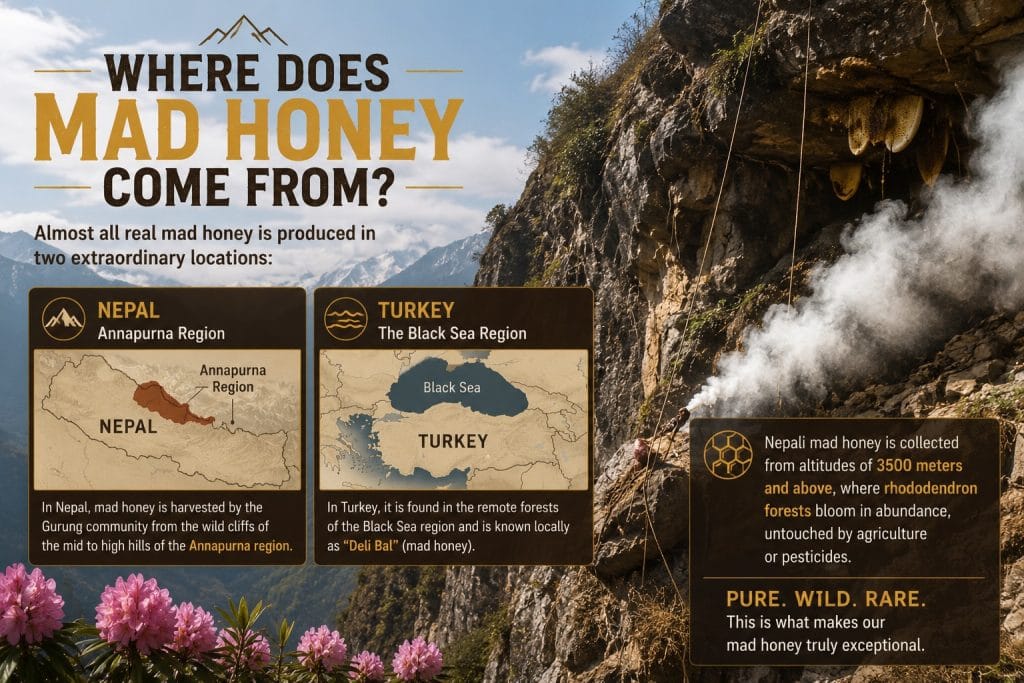
Almost all real mad honey is produced in two locations:
- Nepal, especially along the mid hills of Annapurna regions where the ethnic Gurungs have been practicing honey gathering for many years.
- The Black Sea in Turkey where the mad honey is usually called “deli bal”.
Because mad honey is collected from wild cliffs of altitude higher than 3500 meters and above where rhododendron forest flowers are abundant and undisturbed by agriculture or pesticides it has gained immense value.
The Tradition of Himalayan Honey Hunting
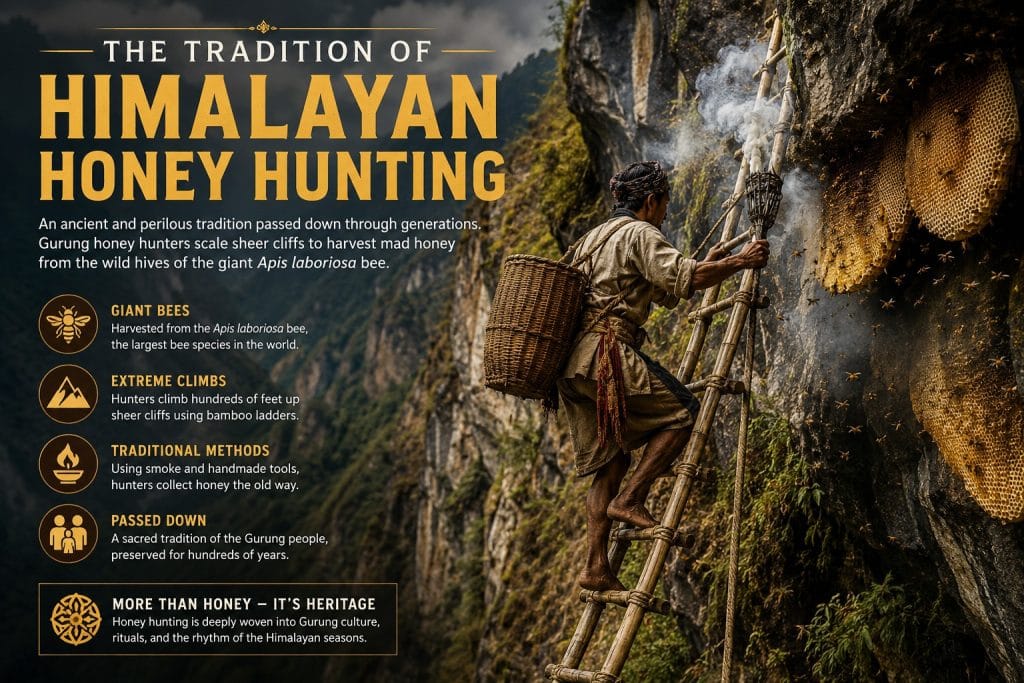
Mad honey collection is more dangerous when compared to traditional beekeeping, it belongs to the most ancient and perilous food collection traditions that exist today.
Famous for mad honey collection, the Gurung people of Nepal climb bamboo ladders hundreds of feet up the steep cliffs with a purpose to reach hives made by the Apis laboriosa bee — the largest species of bee known to humans on Earth. The honey collector uses handmade instruments and smoke, passing on knowledge accumulated through generations.
This practice, sometimes called “honey hunting,” has a great importance for Gurung culture, due to the fact that this technique has been practiced already for hundreds of years, being closely linked with the cultural identity of the Gurung people and the rituals and life influenced by seasons.
Why Is It Called "Mad" Honey?
The name describes the main effect of mad honey consumed, where grayanotoxins enter sodium channels in the body and even a small dosage would cause:
- The warm tingling feeling
- A little bit of lightheadedness or dizziness
- The feeling of relaxed
- Lowered blood pressure and heart rate in some individuals
When consumed under normal and controlled conditions, the effects are usually quite mild and temporary. However, larger dosages of grayanotoxin can result in major effects such as nausea, vomiting, decreased blood pressure, and heart issues, temporary paralysis, also referred to in the past as ‘mad honey poisoning’ or ‘rhododendron honey poisoning.’
The importance of sourcing and dosage in wild honey cannot be overstated since this honey is different from regular honey, which means higher observation and respect is needed.
Traditional and Modern Uses of Mad Honey
This honey has been utilized for health purposes for centuries. The different uses include:
- Daily use in the routine of wellness practices, mostly done in the morning, on an empty stomach
- Natural cures for digestive problems and cold related illnesses
- Topical application in traditional medicine practices
- Use when engaging in spiritual activities, where its calming effects are evident
Although this honey has a long history of usage, its long-term effects on the human body are not fully understood yet.
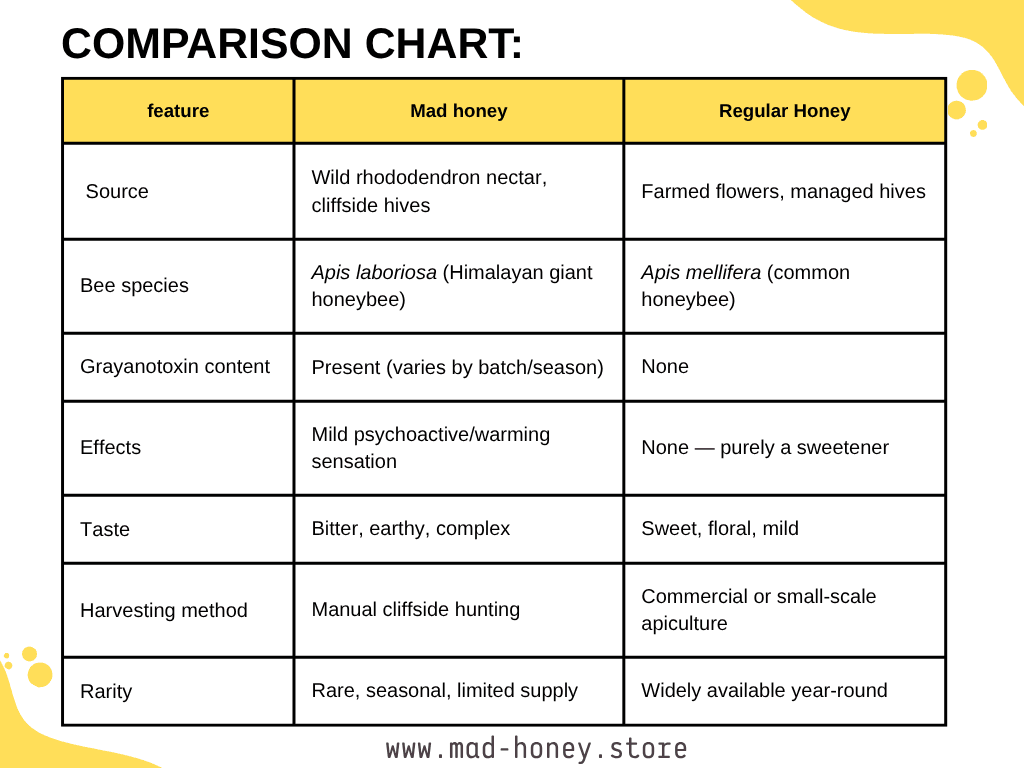
Mad Honey vs. Regular Honey
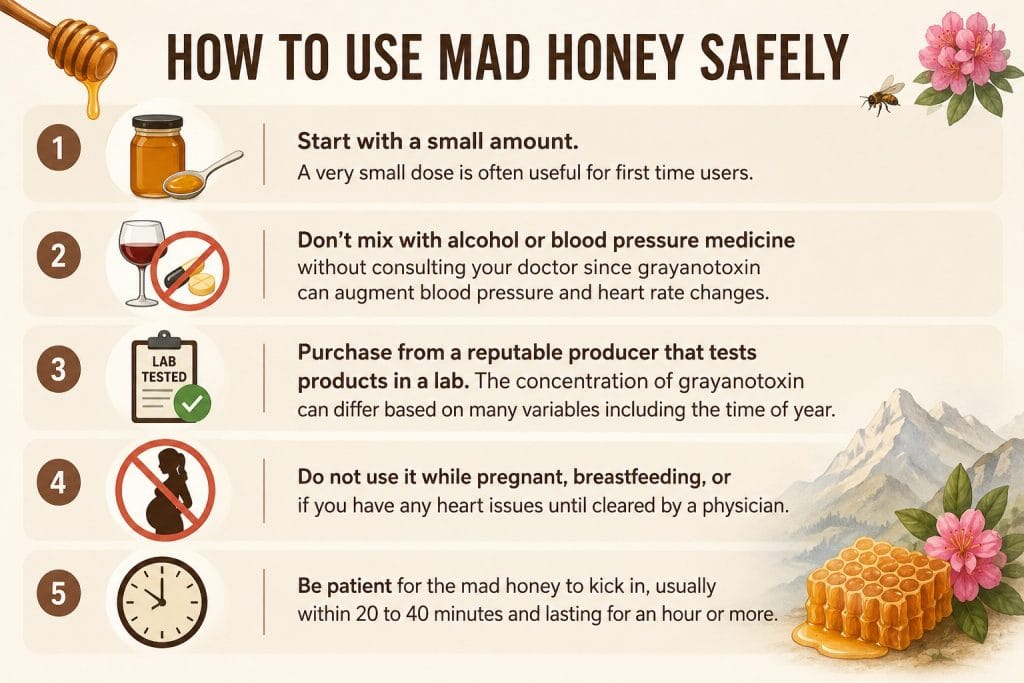
How to Use Mad Honey Safely
Because of its grayanotoxin content, this honey should always be used mindfully:
- Start with a small amount. A very small dose is often useful for first time users.
- Don’t mix with alcohol or blood pressure medicine without consulting your doctor since grayanotoxin can augment blood pressure and heart rate changes.
- Purchase from a reputable producer that tests products in a lab. The concentration of grayanotoxin can differ based on many variables including the time of year.
- Do not use it while pregnant, breastfeeding, or if you have any heart issues until cleared by a physician.
- Be patient for this honey to kick in, usually within 20 to 40 minutes and lasting for an hour or more.
What Makes Authentic Mad Honey Different from Imitations
The rise in the popularity of this wild honey has led to a notable presence of dilution, flavoring, or mislabeling in the market of mad honey. Authentic wild honey should be:
- Sourced from a verified and well-defined locality and time
- Raw and untreated with no sugar or syrup
- Dark, thick, and mildly bitter, as it should have a variation in sweetness
- Tested in a laboratory for grayanotoxin content, as it ensures that the dosage is safe and constant
In order to be sure that wild Himalayan mad honey is not a counterfeit, it is important to select a retailer that provides information about its harvesting processes and origins.
Red Flags When Buying Mad Honey
- Unrealistically low prices
- No mention of grayanotoxin testing
- No transparency about the harvesting process
- No clear dosage and safety guidance included
- Thin, light-colored and sweet taste
How To Recognize Original Mad Honey
- Dark in color as compared to the regular honey
- taste bitter, earthy, and slightly medicinal
- Lab testing of grayanotoxin
- Physical effect in small dosage
- Original wild honey comes from Annapurna region of Nepal
The Best Season for Honey Hunting in Nepal
Honey hunting in Nepal isn’t a year round activity, it follows the natural rhythm of the rhododendron bloom and the behavior of the Himalayan giant honey bee. Traditionally, harvests take place twice a year, and each season produces honey with slightly different characteristics.
Spring Harvest (April–May)
This is considered the primary harvest time. It coincides with the peak rhododendron blooming season in the mid hills of the Annapurna region, when hives are richest with nectar. Honey collected in spring is often described as more potent, owing to the higher concentration of grayanotoxin from the fresh rhododendron flowers.
Autumn Harvest (October–November)
A second, smaller harvest takes place after the monsoon season, once the bees have rebuilt their combs. Autumn honey tends to be milder in both flavor and potency compared to the spring harvest, though it’s still prized for its quality and rarity.
Why Timing Matters
Honey hunters time their climbs carefully around these windows — too early and the combs aren’t full, too late and bees may have already been disturbed by weather or predators. The steep cliffs also become more dangerous to climb outside these traditional windows, since seasonal weather patterns affect rock stability and bee activity.
For buyers, knowing the harvest season behind a batch of mad honey can also be a useful marker of authenticity and quality — sellers who can tell you whether their honey is from a spring or autumn harvest are typically closer to the source and more transparent about their supply chain.
Conclusion
Mad honey is much more than just another new trend. It is a custom that originated in the Himalayas a really long time ago that is followed by honey hunters who have figured out ways to harvest honey generations after generations. Because of the presence of grayanotoxin, this wild honey is unique and has the ancestral value of Nepal’s people which enriches the people of Nepal.
Frequently Asked Questions
Is mad honey legal?
In most countries, including the United States and across Europe, this honey is legal to buy, sell, and consume. Regulations can vary by country, so it's worth checking local import rules if you are ordering internationally.
How long does mad honey last?
This honey, like all raw honey, has a very long shelf life when stored in a cool, dry place away from direct sunlight — often several years — though its potency may gradually mellow over time.
Can you cook with mad honey?
Heating this honey can degrade some of its natural compounds and alter its effects, so it's generally consumed raw rather than cooked into recipes.
What does mad honey taste like?
It's notably more bitter and complex than regular honey, often described as earthy, herbal, or slightly medicinal, with a lingering aftertaste from the rhododendron nectar.
Related Posts

Effects of Mad Honey: Benefits, Risks, and Cultural Significance
Discover the unique effects of Mad Honey, including its psychoactive properties,

Why Mad Honey is Expensive?
Here’s a detailed explanation of why mad honey is expensive?

The Fascinating World of Mad Honey: Nature’s Psychedelic Delight
What is Mad Honey? Mad honey, known as deli bal in some cultures, is a unique ty